Open Data
History
What is Open Data?
Open data are data that are made freely available to access, share, interrogate and re-use. The benefits of open data include greater transparency and opportunities for collaboration, participation and social innovation. Open data can lead to new knowledge generation from combined sources, improved efficiency and effectiveness of services, economic growth and improved social welfare. (source: https://www.exeter.ac.uk/research/openresearch/opendata/)
Open Data at USIM
In order to support Open Data initiative, USIM currently focusing Open Research Data. USIM recognises that data collected in the conduct of a research are a key asset that will continue to yield benefits after the conclusion of the research. It also contributes to scientific advancements through its availability for sharing.
Objectives
The Open Data initiative at USIM aims to:- Encourage data sharing to foster new knowledge discovery.
- Improve research transparency and reproducibility.
- Enable other researchers to reuse and build upon existing datasets.
- Support collaboration across institutions and disciplines.
Benefits and Impact
The initiative contributes to a more effective research ecosystem by:- Accelerating innovation through reuse of data.
- Reducing duplication of research efforts.
- Enhancing credibility and verification of research findings.
- Supporting evidence-based decision making in society.

Research Data
What is Research Data?
Research data encompasses a wide array of information collected, observed, or created for the purposes of analysis to produce original research results. Research data includes, but is not limited to Quantitative Data, Qualitative Data, Experimental Data, and Observational Data.
In essence, research data is any information that is systematically collected and analyzed to advance knowledge in a particular field. It is the backbone of the research process, providing the empirical evidence needed to support theories, models, and findings.
Research Data Management and Sharing
USIM supports open data through its Research Data Management practices and policies:
- Researchers are encouraged to develop Data Management Plans (DMPs).
- Research data (including raw data) is considered an important asset to be collected, stored, and shared.
- The policy applies to all research data, regardless of format or funding source
FAIR Data
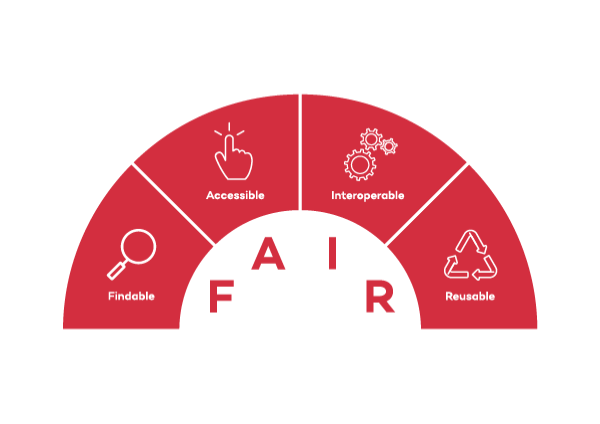
USIM implementing FAIR principles in managing the research data to be easily discovered, accessed, integrated, and reused.
- FINDABLE – Data is easy to locate through; persistent identifiers (e.g., DOI), rich metadata descriptions, indexed searchable repositories.
- ACCESSIBLE – Data can be retrieved by users; via standard protocols (e.g., HTTP), with clear access conditions (open, restricted, or embargoed), even when data is restricted, metadata remains accessible.
- INTEROPERABLE – Data can be integrated and used across systems; uses standard formats (e.g., CSV, XML, JSON), applies controlled vocabularies and metadata standards, compatible with various platforms and tools.
- REUSE – Data is well-documented for future use; includes clear licensing (e.g., Creative Commons), provides detailed documentation and provenance, meets disciplinary and ethical standards.